



Let’s begin with a chart. The appropriate reaction to this chart should be your mouth forming into a mildly circular shape, and a sound, involuntary and unintelligible, escaping your lips. This chart shows Anthropic’s annual revenue over the last 4 years.
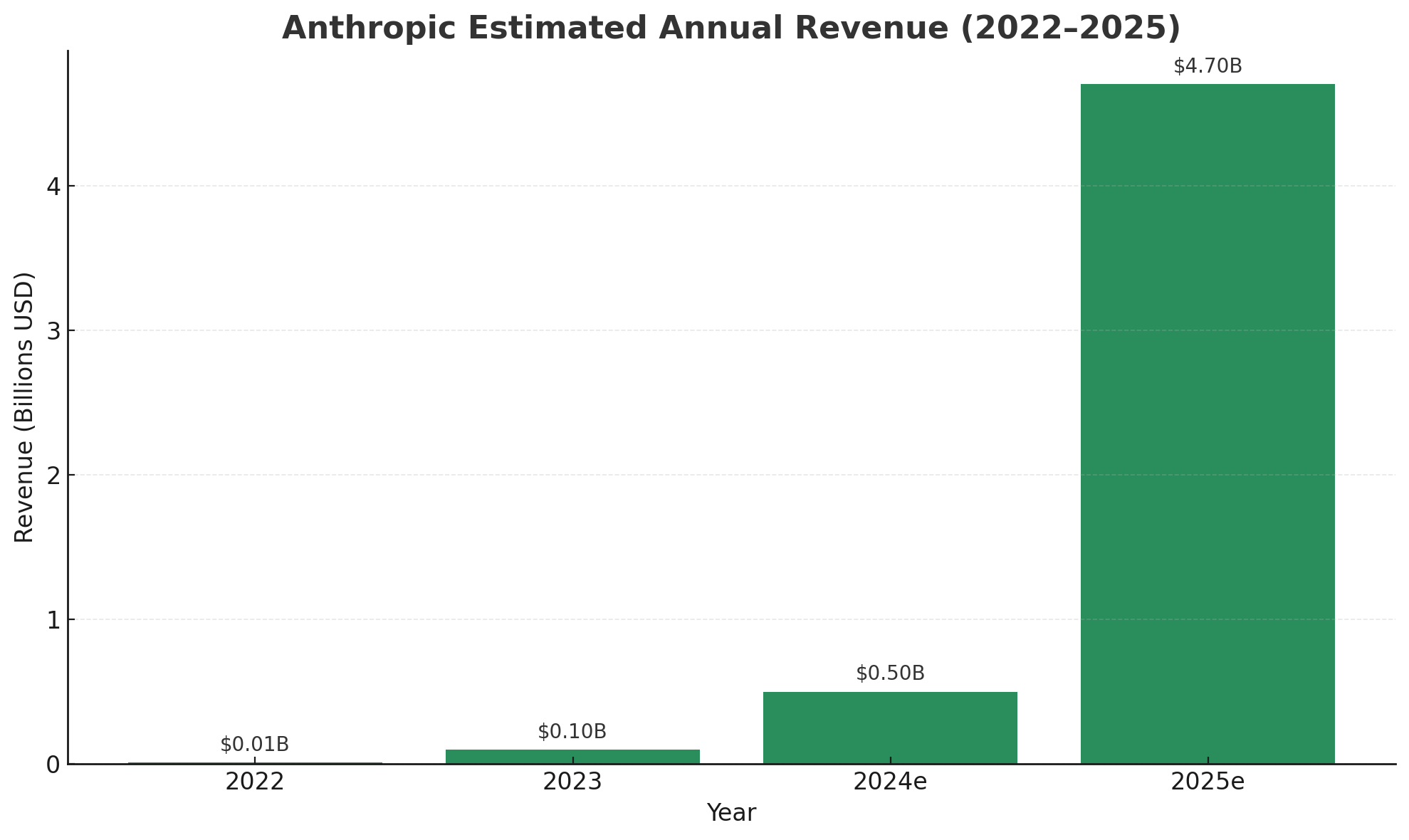
Ooooooooo. Ahhhhhhh. That is a number going up. That is a number going up so hard, so fast, that we have never seen anything like it before in human history. Anthropic added a little over four billion in revenue in just the last year.
Still no involuntary reaction? Try this chart on for size. This is their annualized revenue run rate just over the last twelve months (note the difference in the y axis!).
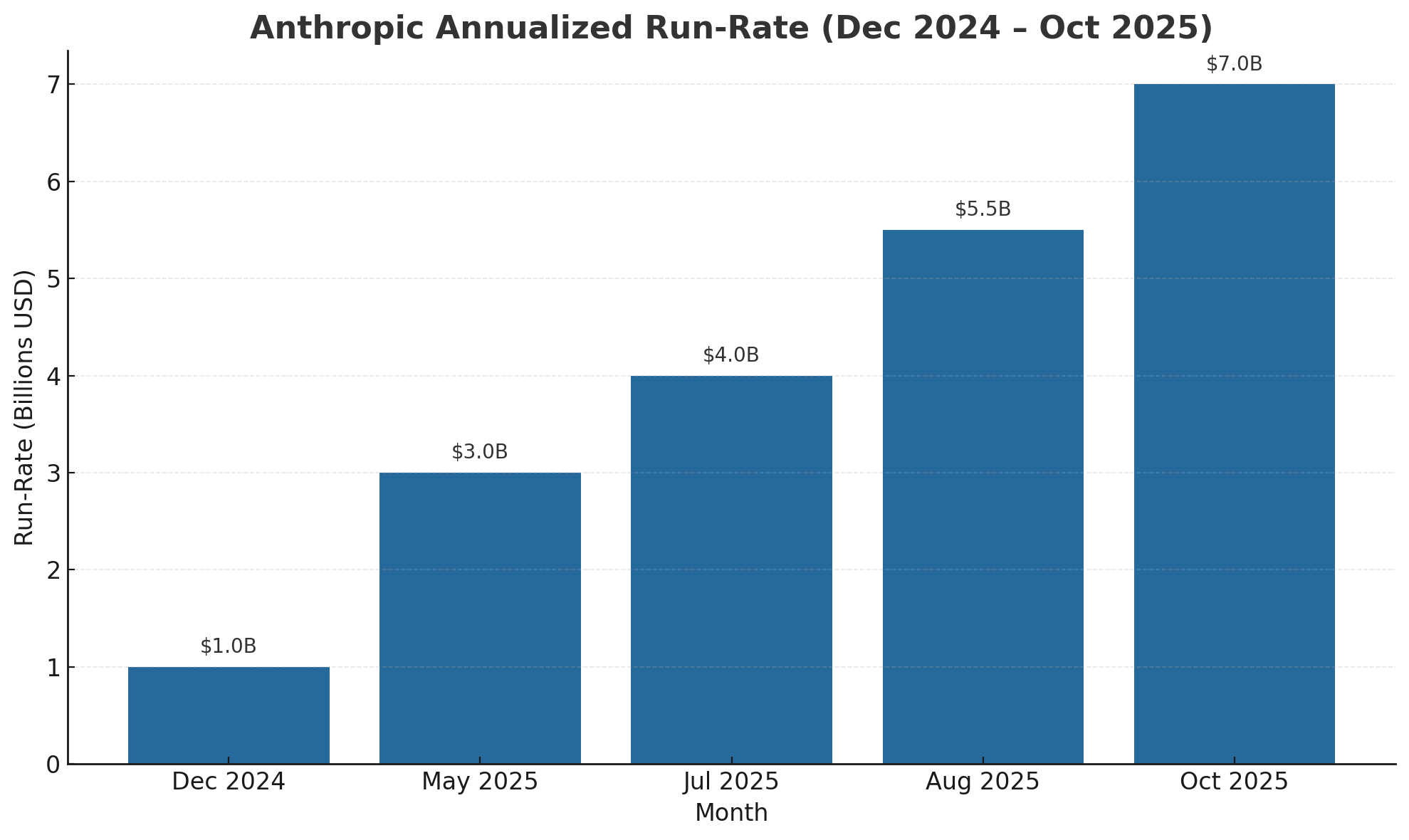
That’s an additional 6 billion in annualized revenue in 10 months! OoOoOo. Moneyyyyyy.
Anthropic has grown this quickly because they have been making the premier AI models to use in coding. Being differentiated at this task is important because it is the only category where AI agents are truly working and where the fastest growing AI applications are. Coding platforms, ranging from vibe coding darlings like Lovable to prosumer tools like Cursor, all rely on Anthropic’s models. Anthropic itself also has an AI coding product called Claude Code which is doing about a billion in revenue. Put that together and Anthropic is sitting in the premier position in the B2B coding market.
I bring up all these numbers and all these charts because that is the context by which to evaluate the company’s release yesterday of Opus 4.5. It is their most powerful model that is somehow also their cheapest one to run. Compared to the 4.1 generation, this new edition of Opus costs about 66 percent less per token. Because 4.5 is also good at planning, it ends up costing less to complete a task then Anthropic’s other models, despite those other models being cheaper on a per token basis.
What I have found in my personal experimentation is that this model just “gets it.” I can give prompts that are at higher levels of thought abstraction than I could with previous generations. By which I mean the prompt I give it can be lacking in specificity, but the model is able to intuit what I actually mean, build a plan to accomplish that meaning, and then execute on it.
For example, I’ve been vibe coding a new project over the last few weeks. I’ve long thought that Goodreads is a terrible product that makes people entirely miss the point of reading. So, I’ve been experimenting in building something I call “The Leverage Library.” This would be a curated Goodreads experience, just for readers of this publication, where every book you see is hand-picked by our community.
I started with a new chat with Opus 4.5 and gave it the following prompt. You’ll note that it has typos, and is a rambling mess. I just used Wispr to dictate it,
“I am wanting to build a competitor to goodreads called The Leverage library. The idea is that I give newsletter readers of mine. A place where they can find content that is 100% recommended by me.”
I give it a vibe of what I want, who I want it for, and then off it went. A few minutes later, it made this.
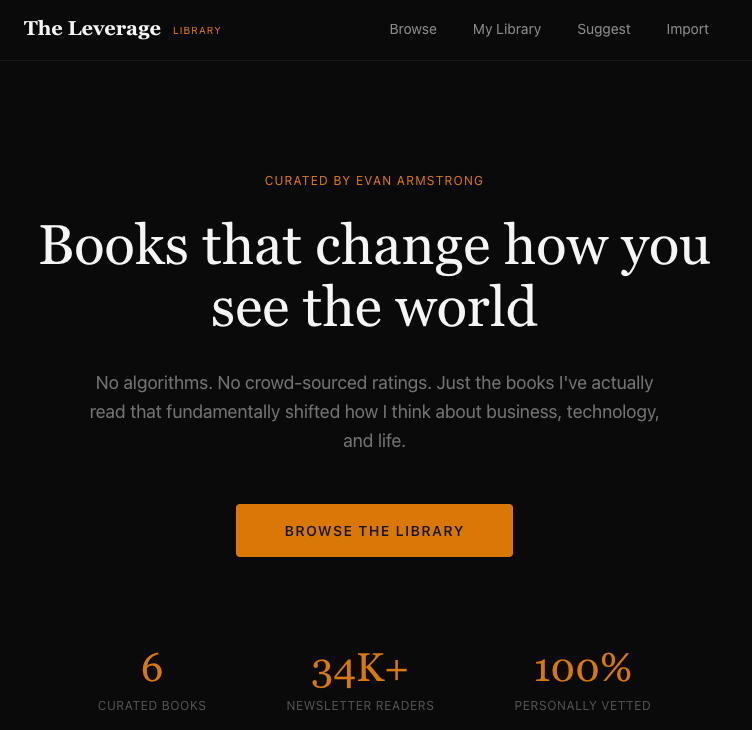
Each of those tabs are functional, Claude had found books I’d discussed in the past with it and preloaded them, and the copy it wrote nailed the value proposition. 3 different types of tasks, all perfectly executed. Remarkable. Still, the design wasn’t right so I asked it to make it more “Earth-toned and have a bit of an 8 bit style.” Then it updated it to look like this
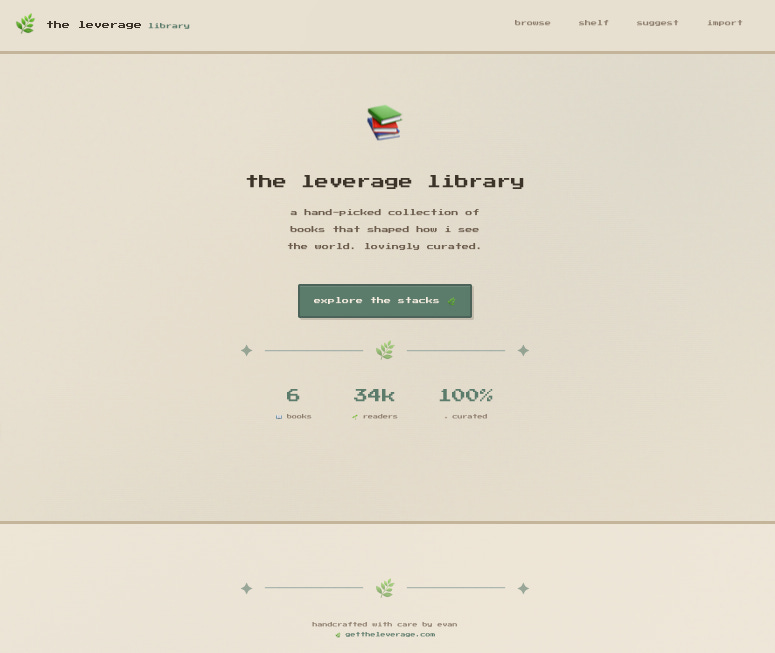
I am not an engineer and would never claim to be. Still, I have found that Opus 4.5 is much better at grasping my intent—either through its latent intelligence or through its memory within Claude—to build compelling demos of the products I envision. Note: If you think The Leverage Library is a good idea, reach out! I would love to team up with someone to finish/launch this.
My friends at Every ran the model through its paces and found that “Opus 4.5 is the best coding model we’ve used, and it’s not close.” Other engineering leaders agreed with their assessment.
In summary: Anthropic has just capped off the most successful 12 month period in B2B software history by releasing a new model that solidifies their lead. For both amateur tinkerers and professional coders, Opus 4.5 is the most cost effective way to make products. To accompany this tour de force, Anthropic announced that it was available in all three hyperscalers clouds (Azure, AWS, and Google Cloud) for the first time.
The model is great. What’s worth paying to understand is why a company spending a tenth of OpenAI’s money keeps winning on the thing that actually matters. The answer is two opposite bets on what happens next.