


When was the last time you changed your mind about AI?
It’s ok if you haven’t in awhile. It’s hard to find the intellectual breathing room. Each day is filled with benchmarks being broken, funding rounds, falsifications, political maneuvers, millions made, billions lost, tweets screeching “it’s so over,” press releases insisting “we’ve never been more back,” executives having affairs with spies, and corporate marriages of increasing size. It’s a cacophony of catastrophes, a deluge of data. It’s nuts out there. It’s also, unfortunately, important to understand it anyway. If the fundamental premise of this industry—namely that we can populate a datacenter with a country of geniuses by 2030—comes to pass, we are making something unlike any technology before it. Otherwise, AI is just a fairly normal Silicon Valley whizpopper that we can get rich from, same as the cloud or the personal computer.
Perhaps understanding the long-term implications of AI is so hard because it has a greedy energy. The memetic contagion it produced, the one where you have “X years before joining the permanent underclass,” was so strong it covered over any nuance or deeper implications.
I just finished six weeks of paternity leave, which is the only true sabbatical from AI I’ve had since, well, since my last kid was born two years ago. During a 3am wake window, with my baby on my chest and her older sister snoring down the hall, the only AI question that mattered to me was what kind of world is this, exactly, that I’ve brought them into? After a month of reflecting on that question, I’m starting from this premise:
We have entered into the beginning stages of the singularity.
By singularity, I mean that we have created technologies whose interiority we do not understand, whose actions we cannot fully control, whose output is too numerous to monitor. Counterintuitively, humanity has mostly used this power to write terrible marketing emails and to cheat on their homework. When set against the $800 billion being poured into it this year, the moment has felt, to most people, overhyped by analysts like me. However, inside of the firms that are making these frontier models, recent independent analysis from METR has found that AI use is accelerating its own development. Worse yet, models are now so powerful that the general public is often accessing versions 1 to 2 generations behind the frontier. The consensus among independent researchers and my sources within the labs, is that this exponential improvement in model capability has no major technical bottlenecks. Taking all of that as a given is, granted, quite a big if, but it is one that I think is true.
And if you stretch it out just a few years, it means that the world my daughters are getting will look radically different than the one I grew up in. The question is what this does to the people living through it, and what you should do about it. This would’ve been an impossible question to answer just 12 months ago, but thankfully, we are starting to get meaningful data on what this future will look like. Here are the 6 most important implications for you to internalize:
1. AI native companies require less employees and make more money.
One of the most fascinating essays I read during pat leave was from the founder of Spawn on how his firm spends 30x more on tokens versus payroll. His team of 10 spends $3.1M a month on AI. It is a totally different way of operating a company where roles blur together and where most work is determining the resource allocation of AI models and the attention allocation of the humans managing them. I’ve now met multiple startups where the office is filled with microphones that record every conversation to feed the context to the models. The organization is essentially a human harness designed around making the models work. It’s a fundamentally different way of company construction that feels foreign, perhaps even icky, to a millennial like me.
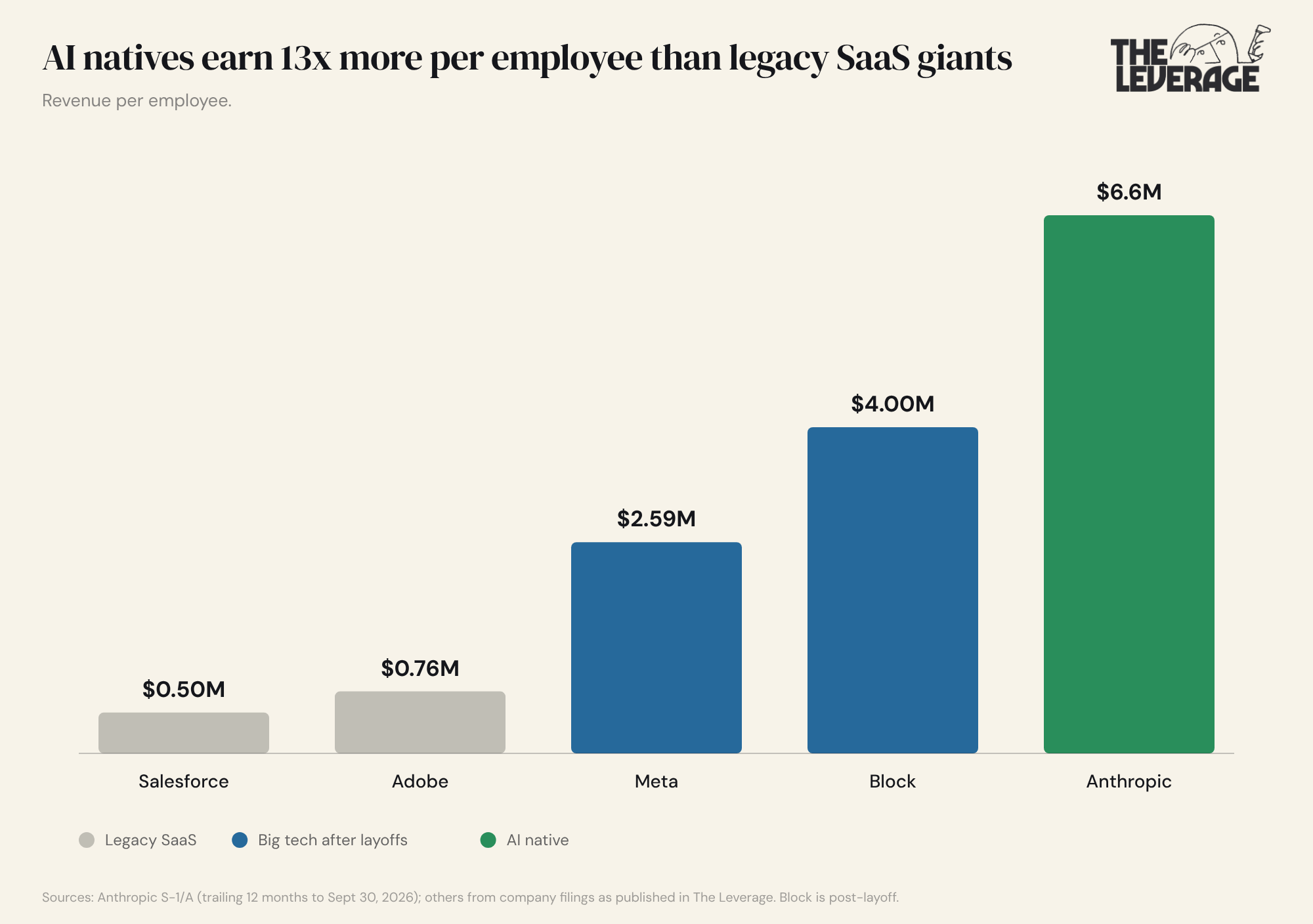
In the 2012-2022 era of tech, if you could get your revenue per employee as a SaaS startup to $750K, you were a god of capitalism. For an aggregator like Meta or Google, that number was closer to $1.25M.
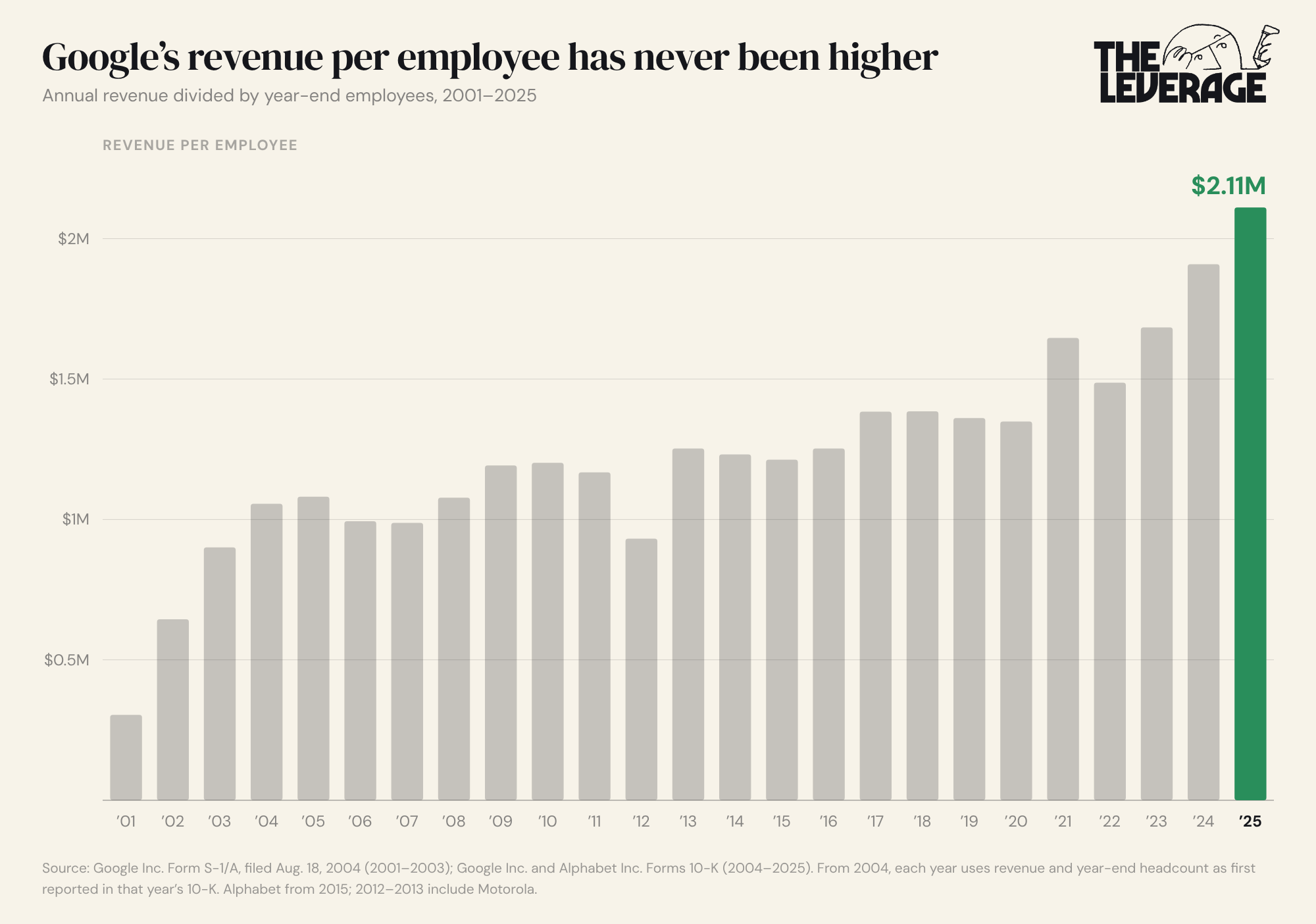
Now though, the best AI-native companies are pushing their way to the $5M+ range with Anthropic hitting $6.6M in their IPO filing. CEOs of existing tech companies are stuck with an extremely challenging problem. How do you become AI native when you designed your company’s org chart for the previous era of technology? The answer thus far has been simple: with the blood of your underlings. Legacy giants, ranging from Meta to Canva, are performing mass layoffs with the goal of transforming their org chart into something more AI native.
Much of the career and operating advice of yesteryear simply isn’t suited for this new way of working. Becoming AI native doesn’t magically make your company a unicorn, but it does allow you to move faster which is the most important ingredient in startup formation anyways.
2. A populist spike will center around Anti-AI policies
If AI native companies become every larger portions of the economy, people are going to be pissed. I could be cute or poetic about it, but I think that you are best served by plain language here. Just in the most recent US midterm elections, Americans came out in force against the infrastructure enabling this tech.
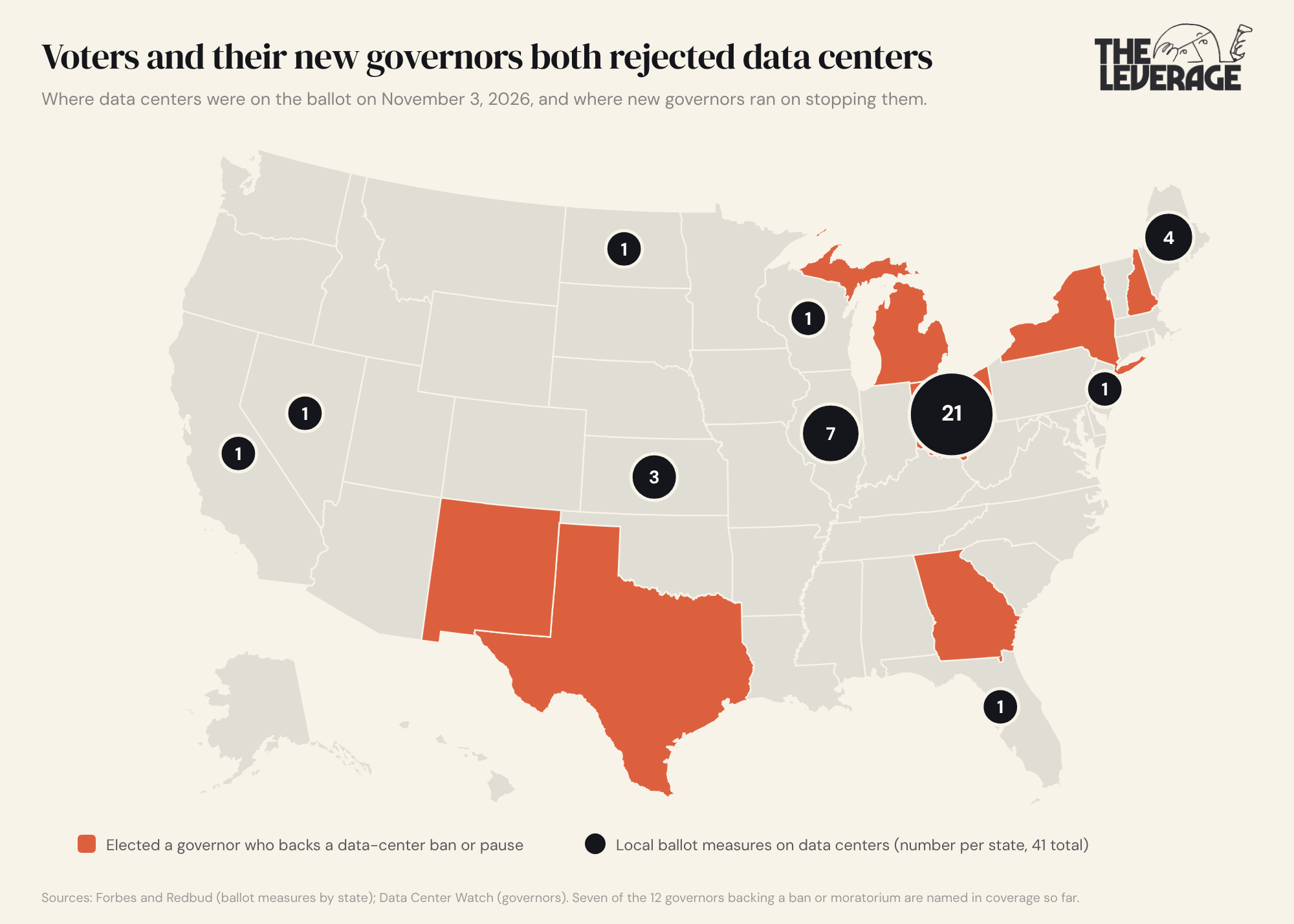
The majority of Americans are against AI. They told exit pollsters in this month’s midterms that AI will mostly hurt society rather than help it, 57% to 24%, and 76% said they don’t want a data center built in their community. Just 9% told Pew this summer that they are more excited than concerned about AI in their daily lives. So far, the advocates of this technology have completely blown the opportunity to get people excited about this technology. Which means that for those of who are the believers and beneficiaries of improvement in the models, we have to think carefully about how we position ourselves publicly. How much political risk are you willing to accept in your career?
I find it unlikely that AI models getting better at knowledge work will resolve this problem because…