


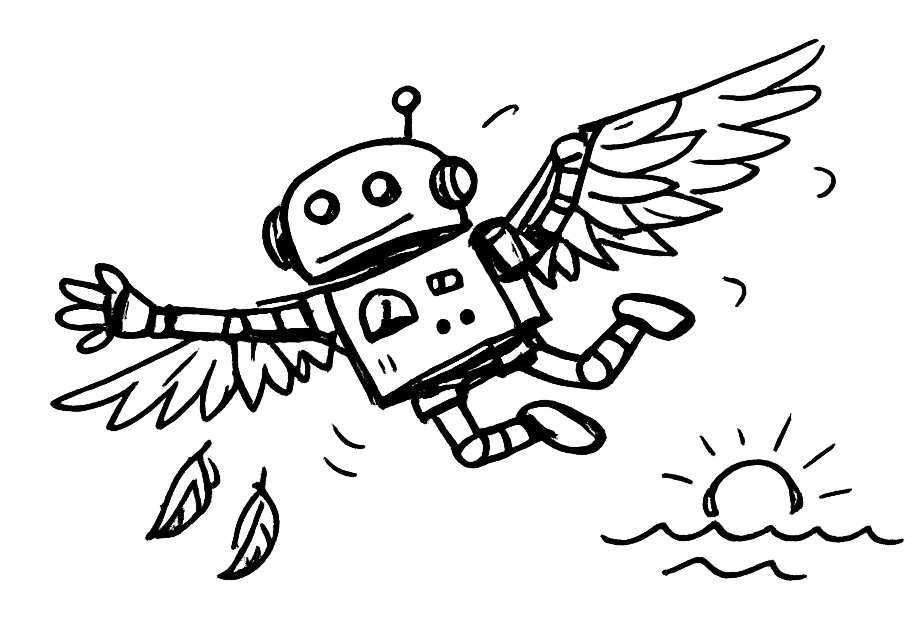
The three laws of AI are as follows:
AI dramatically decreases creation costs, thus increasing distribution costs
Knowing what to build is more important than knowing how to build, rewarding people with taste.
Most people do not have taste, and will have their brains turned into slopified goo.
What’s fascinating about these laws is that they are first appearing in the incredibly dusty and boring world of B2B SaaS. LinkedIn is a hellscape of AI-generated slop. Crappy apps are abundant everywhere. The business world has embraced the slop far faster than people’s media diets, which surprised me a little.
This week has 3 different stories fleshing out that idea, ranging from slop ads to OpenAI’s sloppy financial forecasts. We’ll get to that.
But first, this edition is brought to you by returning sponsor Granola.
I’ve been using Granola as my meeting note-taker for months, but their new MCP integration is what turned it from a nice-to-have tool into genuine infrastructure.
Here’s my workflow: I take about 10 calls a week with founders, investors, and operators to help me write quality research. Often, the best insights from those conversations used to just...evaporate. I’d have some half-formed thesis sitting in a transcript I’d never reopen and would promptly forget about. Now, when I’m writing, I can pull directly from my Granola notes through Claude via MCP. It connects the dots between what a robotics founder told me three weeks ago and the earnings data I’m analyzing today.
This is the actual promise of AI note-taking that most tools miss. It’s not about summarizing your meetings (commodity feature, everyone does this). It’s about making your conversations compounding assets—searchable, connectable context that feeds into your real work. It doesn’t just work for writers, everyone from founders to scientists love using Granola.
If you’re doing any kind of research or analysis work, Granola is worth trying. Readers of The Leverage can get their first month free using the link below. Highly recommended!
MY RESEARCH

AI’s most popular strategy theory is dead wrong. For the last few years, it felt like you couldn’t talk to an AI founder without hearing “sell work, not software.” The idea was that as AI capabilities increased, the number of employees required by customers would decrease, therefore putting pressure on seat-based SaaS pricing. The only issue is that four years into that journey, only 7% of startups are actually selling work, and it is almost exclusively done in customer service. How did this happen? How should AI companies actually be charging customers? Read more here.
WHAT MATTERED THIS WEEK?

BIG TECH
I’ve seen the future of ads. This week Google Labs released an experiment called Pomelli, which will build a profile of your brand and then generate social media assets or marketing campaigns for you. Are you also yawning reading that last sentence? This sounds generic as hell. I’ve met a hundred startups that promise something similar over the last few years. But what this one does differently is actually work. The product is magical, in particular around generating photo assets. Just give it a picture of your product and you’ll get an image indistinguishable from a photo shoot costing many thousands of dollars. (See examples here and here if you don’t believe me.)
This gives small companies like mine the ability to market physical goods in a competitive way against large companies. For example, one thing I’ve wanted to make is a custom cologne for The Leverage. My reasoning is twofold: 1) this just sounds fun to do and 2) people at tech conferences could use some improvement in the olfactory department.
I gave the tool a picture of a generic perfume bottle, a link to my website, and this is what it came up with first try.
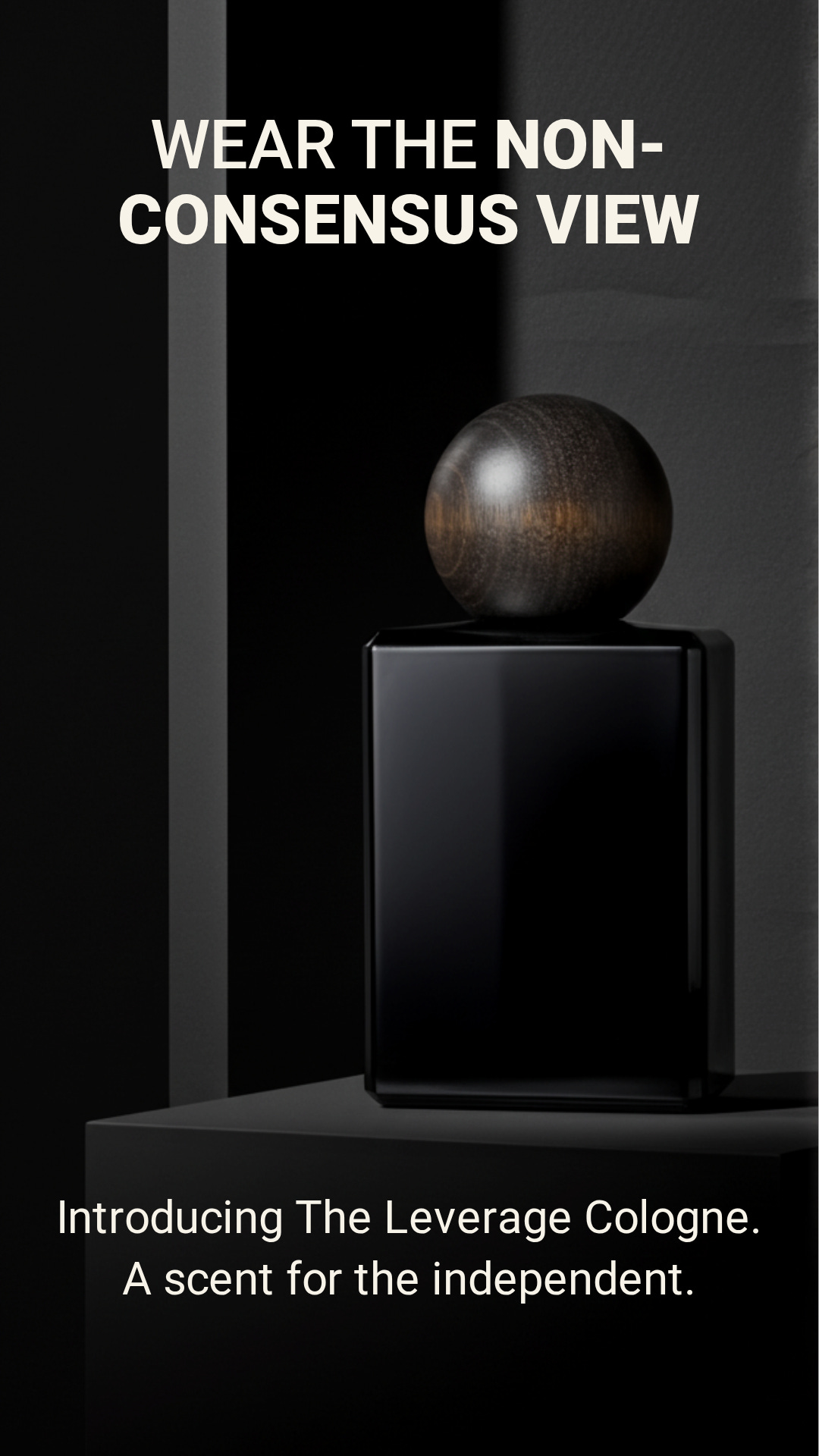
It isn’t perfect! But with a little tweaking on my end, this is something I could easily start putting Meta ads against. What does the world look like when everyone can make beautiful ads? Simple, the volume and price of ads increases, which is exactly why Google is working on this.
BIG LABS
OpenAI’s financial forecasts highlight the problem of ChatGPT. The Information reported a large variety of financial details about OpenAI, but I wanted to point something out with the chart they published below.
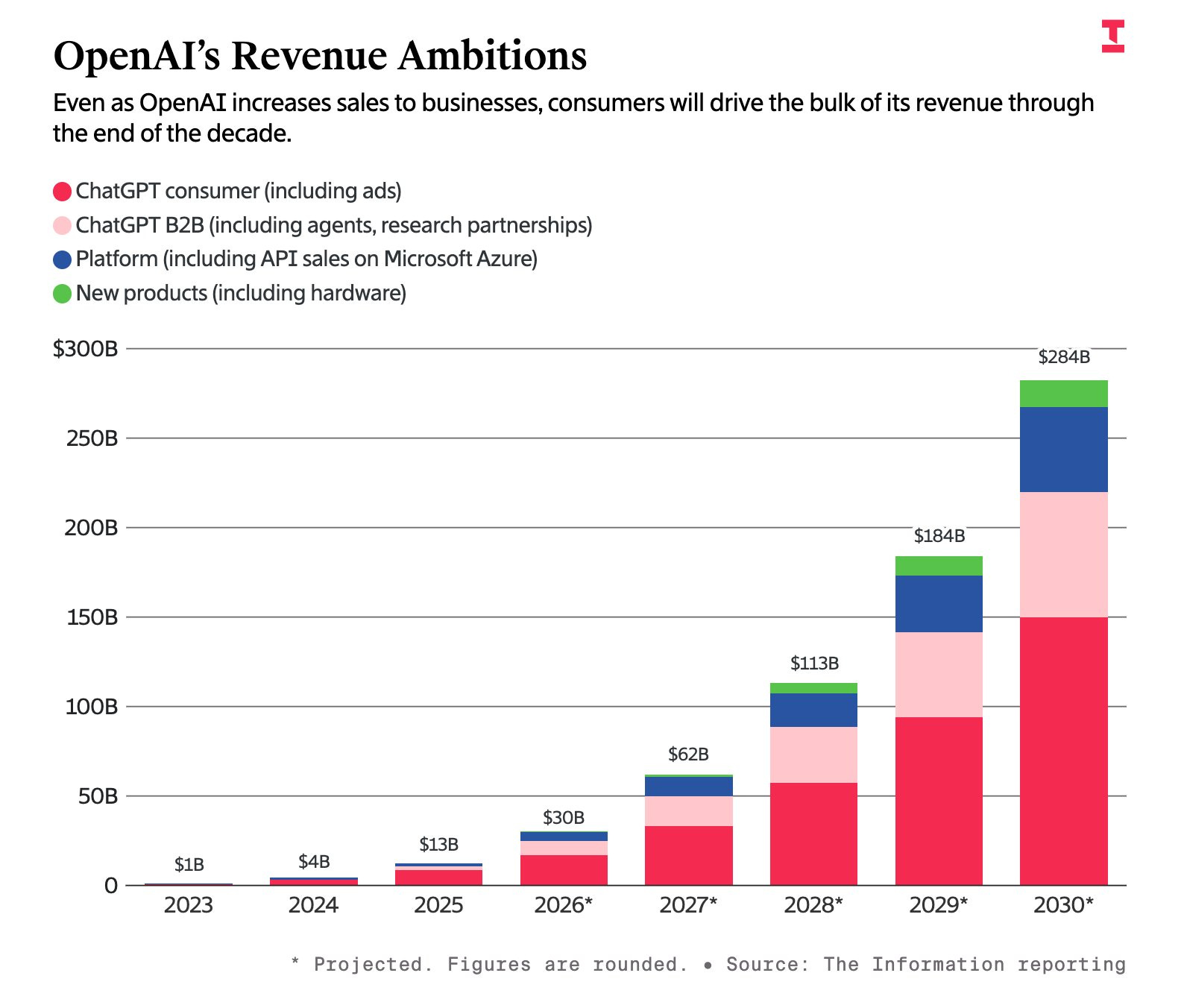
The hallmark of all COVID-era SPACs was forecasting generous cash flows from business lines that didn’t exist. This, uh, looks the exact same to me.
They do have ChatGPT! Which is a wonderful asset, but it is the heart of the problem here. ChatGPT’s current weekly active users just hit a new peak at 910 million, with a 5% conversion rate (fairly typical for prosumer SaaS flows in my experience). However, the usage for those 910 million is bad. As Benedict Evans characterized it, “The data that OpenAI released in its ‘2025 wrapped’ promotion tells us that 80% of users sent less than 1,000 ‘messages’ in 2025. We don’t know how that changed in the year (it probably grew) but at face value that’s an average of less than three prompts per day, and many fewer individual chats. Usage is a mile wide but an inch deep.”
How do you fix this? The default answer from my discussions with AI founders is “we just make the models smarter” and then usage grows. This seems observably wrong to me. The smarter the model is, the less time I’ll spend with it on a per task basis, and the more tokens each task/query I give it will consume. It is very hard to be the smart platform that handles your AI agents and also a consumer-friendly app. And notably, OpenAI’s own data reveals the treadmill they’re on. Execs said that user growth actually slowed earlier this fall, and it took the GPT-5.1 and 5.2 updates—which made the model much more “human-like”—to re-spark it. The models have to keep getting meaningfully better just to maintain growth, let alone accelerate it. It is totally possible that this could happen! But making it happen to the tune of an additional $100 billion or so in revenue in 4 short years seems very aggressive.
“Ah, you are missing it,” Sam Altman may say with a twinkle in his slightly soulless eyes, “when usage grows, we can then show more ads.” Again, this seems simplistic and not in line with where the technology is going. On top of the challenges of building a quality ad targeting platform (which is not easy, X and Snapchat haven’t pulled it off despite a decade of trying), the smarter the models are, the more trust I have to give them, and the fewer ads I want to see. Additionally, the smarter the models get, the more autonomous work I want to give them. I don’t want to see the AI working, let alone see the ads. Simply put, I am not convinced that ChatGPT is the product that’ll take 910 million consumers to an Agent-first world.
And the cost side makes the bet even harder to stomach. OpenAI’s adjusted gross margin— revenue minus inference costs—fell from a 46% target to just 33% last year, because higher-than-expected demand forced them to buy pricey last-minute compute. Total burn through 2030 is now 2x previous estimates, with infrastructure and compute alone costing a projected $665 billion. So we have missed margin targets, doubled cost forecasts, and tripled revenue projections. If that combination doesn’t remind you of a 2021 SPAC deck, I don’t know what will.
On top of all that, the long-term plan calls for ChatGPT to reach 2.75 billion weekly active users by 2030. For context, that’s a stricter engagement metric than monthly actives, where only Facebook, YouTube, and WhatsApp currently sit above 2.75 billion. OpenAI is essentially betting they can build one of the three or four most-used products in human history in the next four years. You add in the consumer hardware, the B2B sales, the research partnerships, the “new products” bucket that’s supposed to generate $1.3 billion next year with still-TBD details, on and on, and this is simply too much for any one company to pull off in this time frame. I love ambition! I really do, but I just think this is too much. To the OpenAI investors who read this newsletter, I would love an off the record conversation about all this. What does this analysis get wrong? Are you feeling nervous?
THE SLOPPENING
Generative media is going to take over this year. Last week, I warned you about the implications of the world’s best video models being indistinguishable from real-life videos. This week, it is important to point out how widespread this phenomenon is. In basically every way we have of interacting with the world, there is now an AI model that is near-indistinguishable from reality. Just in the last year, over 985 models were released on the fal platform, which helps developers integrate these type of models into their applications.
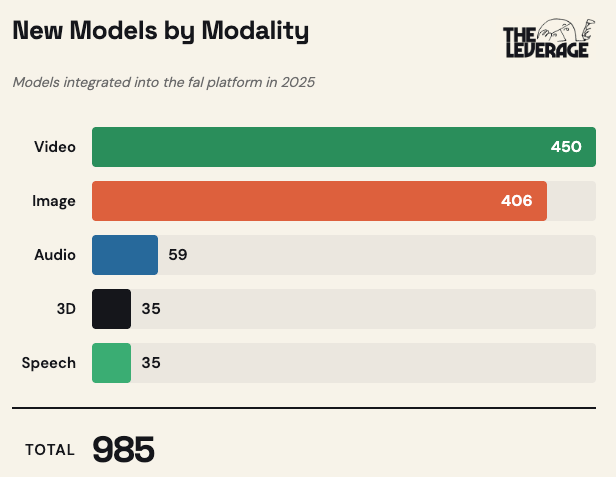
Slop is reality, reality is slop. These models are simply too good, and you should ratchet up your skepticism of every single thing you see online, especially the things you see that conform with your worldview.
TASTEMAKER

Three quick recommendations this week:
A funky Afro-Cuban vinyl set: I love listening to DJ sets while cruising through emails. It’s fun because I alternate between getting stuff done and then gently shaking my booty at my standing desk. This one has been a recent favorite to work to—I dare you not to at least mildly twerk.
Remarkable writing that is only mildly wrong. Sam Kriss is one of the best writers working today. I mean writer in the purest of senses, in that his prose makes my own look like a drowned chicken. There is a sparkling vibrancy to the way he writes that I find simultaneously aspirational and depressing. He also happens to be infected with that delightfully mean and grumpy and ironic attitude that British writers seem prone to. In his latest for Harper’s magazine, he absolutely skewers the “high-agency” grifters that are galloping around Silicon Valley right now. I disagree with much of his analysis, but I very much agree with his emotional insights. Well worth reading.
Fargo holds up: Despite being a loud and proud Minnesotan, I had never watched the Coen Brothers’ classic film about my beloved home state. I watched it for the first time recently and fell off my couch laughing. Just an excellent dark comedy with iconic lines of dialogue. I yearn for a studio system that makes more films like this. It is streaming on Hulu and you can rent it on Amazon for like 2 bucks.
Go and be kind this week,
Evan
Sponsorships
We are now accepting sponsors for the Q1 ‘26. If you are interested in reaching my audience of 34K+ founders, investors, and senior tech executives, send me an email at team@gettheleverage.com.
Loved today's issue! The openai analysis is super helpful to understand how "ambitious" they are. Keep up the good work Evan.
Thought you may be interested in what I wrote about inventing our way out of the Slopocalypse - https://open.substack.com/pub/optimistictech/p/we-need-to-invent-our-way-out-of?r=y2n2m&utm_medium=ios